
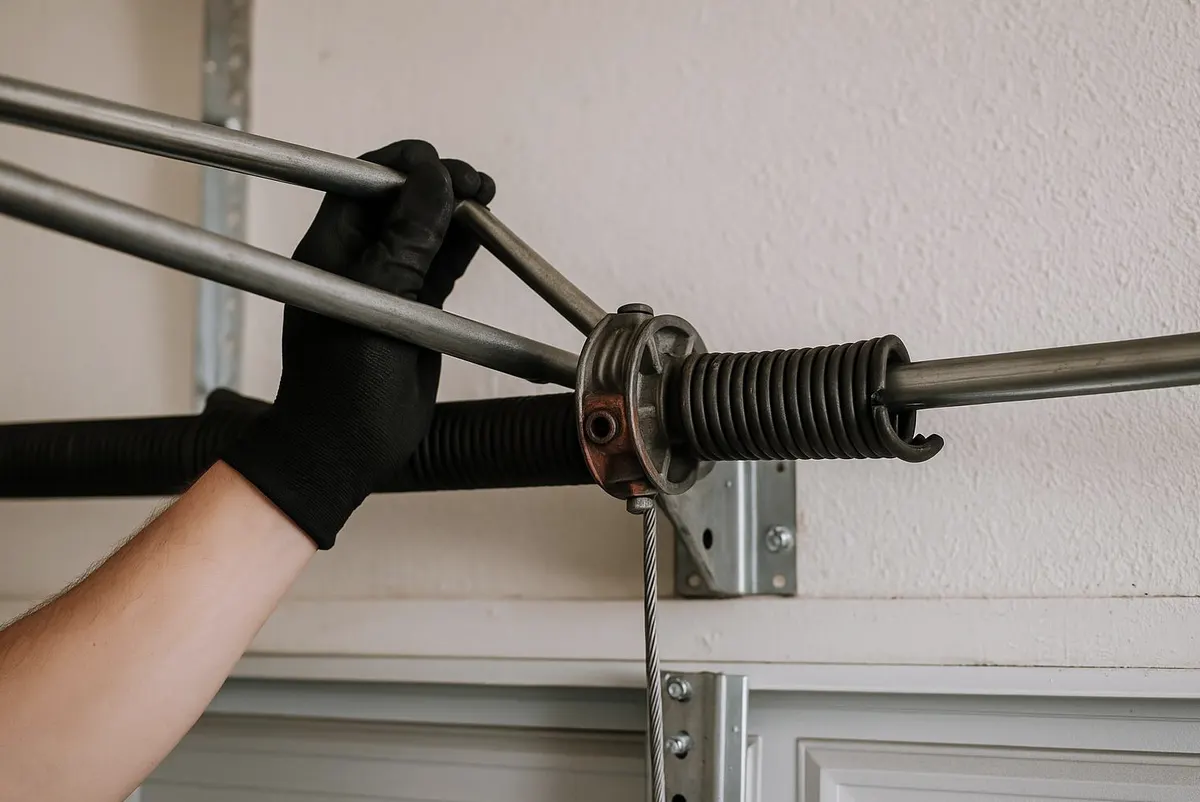
What a Technician Sees on This Kind of Call
This is one of the most common service calls in St. Joseph this time of year. A homeowner presses the button, the door starts down, gets partway, and shoots back up. Or it never moves down at all, and the opener light just blinks. By the time a technician arrives, most people have already tried the remote three or four times and are convinced something expensive just broke. Often it hasn't. The reversing behavior is a safety feature doing exactly what it's designed to do — the opener thinks something is in the door's path, even when nothing is. Figuring out why is a process of elimination, and a tech works through it in a specific order because the easiest fixes are also the most common culprits.
The Symptoms Worth Noting Before You Call
What you describe on the phone actually helps narrow things down, so pay attention to the details:
- Reverses right after it starts down — often points to the sensors or force setting.
- Gets most of the way down, then reverses — often a track obstruction or binding near the bottom.
- Won't move down at all, opener light blinks a set number of times — most newer openers use blink codes tied to the sensors.
- Closes fine some days, not others — frequently tied to sunlight angle or temperature, both of which shift a lot through a St. Joseph fall.
The Causes, in the Order a Technician Checks Them
1. Safety sensor misalignment or obstruction
Every opener made in the last few decades has two small sensors mounted a few inches off the garage floor on either side of the door, connected by an invisible infrared beam. If that beam is broken, blocked, or even just misaligned by a fraction of an inch, the door will refuse to close or will reverse mid-travel. This is the first thing checked because it's the most common cause and takes two minutes to rule out.
What to check yourself: look for a solid, steady light on both sensor eyes (a blinking light means misalignment). Wipe dust, cobwebs, and lawn clippings off the lenses. In fall, falling leaves and wind-blown debris around the garage door base can land right in front of a sensor or nudge a bracket out of alignment. Low-angle morning or late-afternoon sun — more of an issue as days shorten — can also wash out the sensor beam and cause nuisance reversals at the same time every day. A technician will re-aim the sensors, tighten the mounting brackets, and sometimes add a small sun shield if glare is the recurring issue.
2. Close-force and travel limit settings
If the sensors check out, the next thing checked is how the opener itself is programmed. Every opener has limit settings (how far the door travels) and force settings (how much resistance it tolerates before reversing). If the limits are set wrong, the opener may think the door has hit the floor when it hasn't, or think it's hit an obstruction when it's just encountering normal friction. These settings can drift over time, especially after a power outage or a battery backup kicking in. The fix is a recalibration at the opener unit itself, usually a straightforward adjustment, though older units sometimes need a logic board reset.
3. Track obstruction, dirty rollers, or a bent track
Next, a tech runs the door manually (opener disconnected) to feel for binding, grinding, or sticking points along the track. Tracks collect grit, old lubricant residue, and debris over the year, and rollers that were fine in summer's heat can start sticking as temperatures drop and old grease stiffens. A bent track — from a car bumping it, a basketball, or just age — creates a pinch point the door interprets as an obstruction. Cleaning and relubricating tracks and rollers is a simple maintenance task; straightening or replacing a bent track section is more involved but usually doesn't require full door replacement.
4. Spring tension problems
If the door is heavy to lift by hand or the opener strains and groans before reversing, a weakening or broken spring is likely the cause. Springs lose tension gradually, and a door that's even slightly out of balance makes the opener work harder, which trips the force sensor and reverses the door as a protective measure. This is more labor-intensive to fix — springs are under heavy tension and this is not a DIY repair. A technician will assess wear and replace the spring (or both springs, since they're usually replaced in pairs) so the door moves freely again.
5. Opener logic board or circuit failure
Checked last because it's the least common cause, a failing logic board can send inconsistent signals that cause random reversals with no obvious mechanical trigger. If everything mechanical checks out — sensors, settings, track, springs — and the problem persists, the opener's internal electronics are the remaining suspect, and replacement of the opener unit is usually more practical than repairing the board.
When to Call St. Joseph Overhead Door Co
If you've wiped the sensors and the door still won't cooperate, or if the door feels heavy and the opener is straining, it's time to call. We'll run through this same checklist on-site, starting with a Garage Door Repair diagnostic, and move into Spring Replacement or opener service if that's what's needed. Fall is also a smart time for a general tune-up before winter ice and cold settle in and make small problems worse.
If your garage door in St. Joseph, Savannah, Country Club, or the surrounding area is reversing, sticking, or refusing to close, call St. Joseph Overhead Door Co and we'll get it sorted before the cold weather arrives.